
What is Benign Prostatic Hyperplasia (BPH)?
Benign Prostatic Hyperplasia, commonly known as an enlarged prostate, is a non-cancerous growth of the prostate gland that occurs frequently in aging men. As the prostate enlarges, it can press against the urethra, leading to a range of bothersome urinary symptoms that affect quality of life.
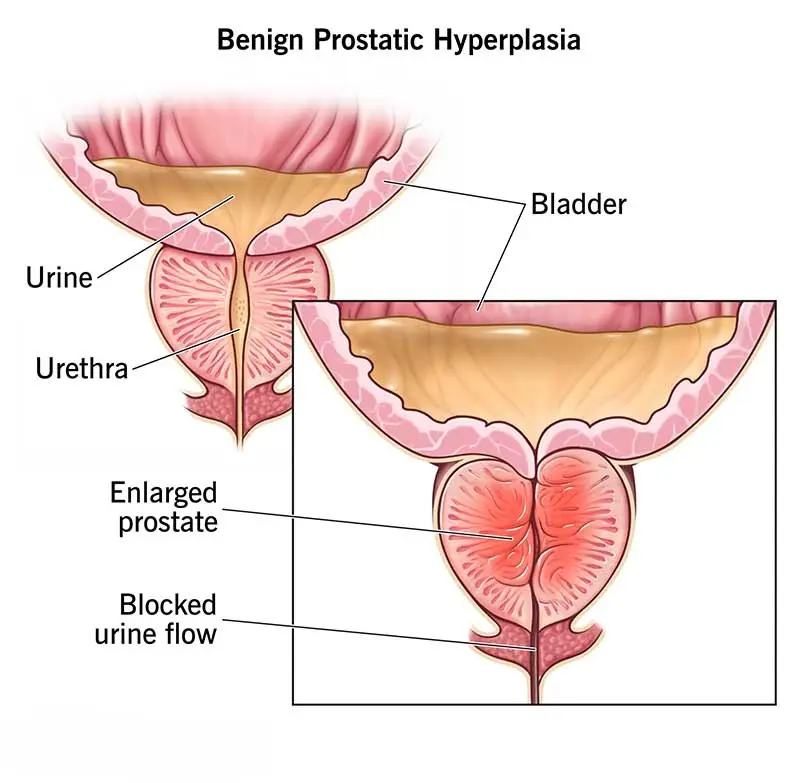
Common Symptoms
- Frequent urge to urinate, especially at night (nocturia)
- Difficulty starting or stopping urination
- Weak or interrupted urine stream
- A feeling of incomplete bladder emptying
- Straining while urinating
- Urinary urgency
- Recurrent urinary tract infections
- In advanced cases, urinary retention
Traditional Treatment vs. Modern Approach
BPH has traditionally been managed with medications or surgical procedures such as TURP (Transurethral Resection of the Prostate). While surgery can be effective, it carries risks including bleeding, retrograde ejaculation, incontinence, and sexual dysfunction, along with the need for anesthesia and hospital stay.
Prostate Artery Embolization (PAE) offers a minimally invasive alternative that treats the enlarged prostate by targeting its blood supply — without the need for surgery or anesthesia-related risks.
What is Prostate Artery Embolization?
Prostate Artery Embolization is an advanced, image-guided procedure that blocks the blood vessels supplying the enlarged prostate, causing it to shrink over time and relieving urinary symptoms. Performed by an experienced Interventional Radiologist like Dr. Lalit Garg, PAE offers effective, long-lasting symptom relief with a much lower risk profile than surgery.
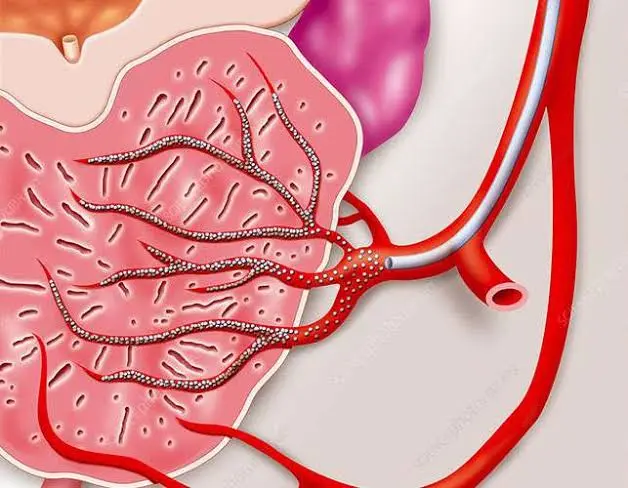
How is the Procedure Performed?
- Local Anesthesia — The procedure is performed under local anesthesia; the patient remains awake and comfortable.
- Catheter Insertion — A thin catheter is inserted through a small puncture, typically in the groin or wrist, and guided to the prostate arteries using advanced imaging.
- Embolization — Tiny particles are injected into the arteries supplying the prostate, blocking blood flow to the enlarged tissue.
- Gradual Shrinkage — Deprived of blood supply, the prostate gradually shrinks over the following weeks to months, easing pressure on the urethra and improving urinary symptoms.
The procedure usually takes about 60–90 minutes.
Benefits of Prostate Artery Embolization
- Minimally Invasive — No surgical incision or resection of prostate tissue
- Preserves Sexual Function — Significantly lower risk of erectile dysfunction or retrograde ejaculation compared to surgery
- No General Anesthesia Required — Performed under local anesthesia
- Quick Recovery — Most patients return home the same or next day and resume normal activities within a few days
- Effective Symptom Relief — Significant improvement in urinary flow and quality of life
- Lower Risk of Complications — Reduced risk of bleeding, incontinence, and infection compared to surgical options
- Suitable for High-Risk Surgical Patients — An option for men who may not be fit for traditional surgery due to age or other health conditions
Who is a Good Candidate?
PAE may be recommended for men experiencing:
- Moderate to severe urinary symptoms due to an enlarged prostate
- A wish to avoid surgery or its associated risks
- Concerns about sexual side effects from surgical treatment
- Recurrent urinary retention due to BPH
- Higher surgical risk due to age or other health conditions
Note: Candidacy for PAE depends on prostate size, artery anatomy, and overall health — a detailed consultation and imaging assessment help determine suitability.
Recovery After the Procedure
- Mild discomfort, urinary urgency, or blood in the urine may occur for a few days and typically resolves on its own
- Most patients are discharged within 24 hours
- Return to normal activities within 2–3 days
- Symptom improvement often begins within a few weeks, with continued improvement over the following months
- Follow-up consultations help monitor prostate size and symptom relief
Why Choose Dr. Lalit Garg for Prostate Artery Embolization?
Dr. Lalit Garg, Consultant Vascular & Interventional Radiologist at Santokba Durlabhji Memorial Hospital (SDMH), Jaipur, brings specialized expertise in vascular and urological interventions, including Prostate Artery Embolization. His precise, minimally invasive approach helps men find lasting relief from BPH symptoms while preserving sexual function and avoiding the risks of major surgery.
If you’re experiencing urinary symptoms related to an enlarged prostate, consult Dr. Lalit Garg for an expert evaluation and to explore whether PAE is the right option for you.