What is a Thyroid Nodule?
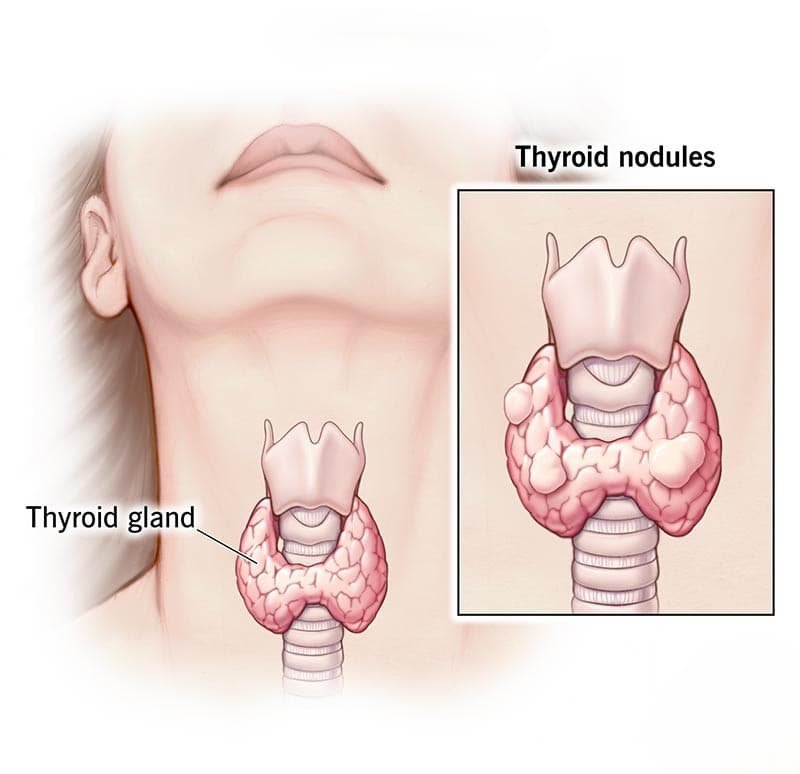
A thyroid nodule is a lump or growth that develops within the thyroid gland, located at the front of the neck. Thyroid nodules are extremely common, and the majority are benign (non-cancerous). However, depending on their size and location, they can cause visible swelling, discomfort, or pressure-related symptoms that affect daily life.
Common Symptoms
- A visible or palpable lump in the neck
- A feeling of fullness or pressure in the throat
- Difficulty swallowing
- Hoarseness or voice changes
- Discomfort or tightness in the neck
- Cosmetic concern due to visible swelling
- In some cases, symptoms of overactive thyroid function (if the nodule is hormonally active)
Traditional Treatment vs. Modern Approach
Historically, symptomatic thyroid nodules were managed with long-term monitoring, medication, or surgical removal of part or all of the thyroid gland (thyroidectomy). While surgery is effective, it carries risks such as scarring, potential voice changes, and lifelong thyroid hormone replacement if the entire gland is removed.
Thyroid Nodule Ablation offers a minimally invasive, gland-preserving alternative that treats the nodule directly — without the need for surgery or a visible neck scar.
What is Thyroid Nodule Ablation?
A thyroid nodule is a lump or growth that develops within the thyroid gland, located at the front of the neck. Thyroid nodules are extremely common, and the majority are benign (non-cancerous). However, depending on their size and location, they can cause visible swelling, discomfort, or pressure-related symptoms that affect daily life.
How is the Procedure Performed?
- Local Anesthesia — The procedure is performed under local anesthesia, with the patient awake and comfortable throughout.
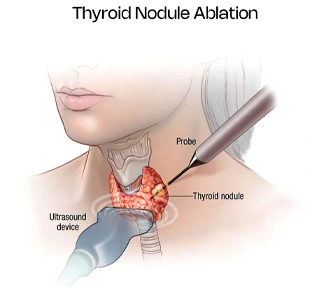
- Ultrasound Guidance — Using real-time ultrasound imaging, a thin probe or needle electrode is precisely positioned within the nodule.
- Ablation — Targeted energy (radiofrequency or similar technology) is delivered to the nodule, causing controlled tissue destruction while sparing the surrounding healthy thyroid tissue.
- Gradual Shrinkage — Over the following weeks to months, the treated nodule gradually shrinks in size, and associated symptoms improve.
The procedure typically takes about 30–60 minutes, depending on nodule size, and is usually performed on an outpatient basis.
Benefits of Thyroid Nodule Ablation
- No Surgical Incision — No visible neck scar
- Gland-Preserving — Normal thyroid tissue and function are maintained
- No General Anesthesia Required — Performed under local anesthesia only
- Quick Recovery — Most patients resume normal activities within a day
- Reduced Risk of Complications — Lower risk of voice changes or need for lifelong thyroid hormone replacement compared to surgery
- Effective Symptom Relief — Significant reduction in nodule size and associated pressure symptoms
- Day-Care Procedure — Typically does not require hospital admission
Who is a Good Candidate?
Thyroid Nodule Ablation may be recommended for patients with:
- A confirmed benign thyroid nodule (via biopsy/FNAC)
- Nodules causing visible swelling, pressure, or swallowing difficulty
- A wish to avoid surgery or general anesthesia
- Concerns about surgical scarring
- Recurrent nodules or cysts after previous treatment
Note: Candidacy depends on nodule characteristics confirmed through prior evaluation, including ultrasound and biopsy — a detailed consultation helps determine suitability.
Recovery After the Procedure
- Mild swelling, soreness, or bruising at the treatment site may occur for a few days
- Most patients can resume normal activities the same day or the next
- Voice changes are uncommon and typically temporary if they occur
- Follow-up ultrasound scans are done at intervals to monitor nodule shrinkage
- Noticeable reduction in nodule size is often seen over the following months, with continued improvement over time
Why Choose Dr. Lalit Garg for Thyroid Nodule Ablation?
Dr. Lalit Garg, Consultant Vascular & Interventional Radiologist at Santokba Durlabhji Memorial Hospital (SDMH), Jaipur, brings precise, image-guided expertise to the treatment of thyroid nodules. His minimally invasive approach helps patients achieve effective symptom relief and cosmetic improvement — without surgery, scarring, or loss of thyroid function.
If you have a thyroid nodule causing discomfort or cosmetic concern, consult Dr. Lalit Garg for an expert evaluation and to explore whether ablation is the right treatment option for you.